


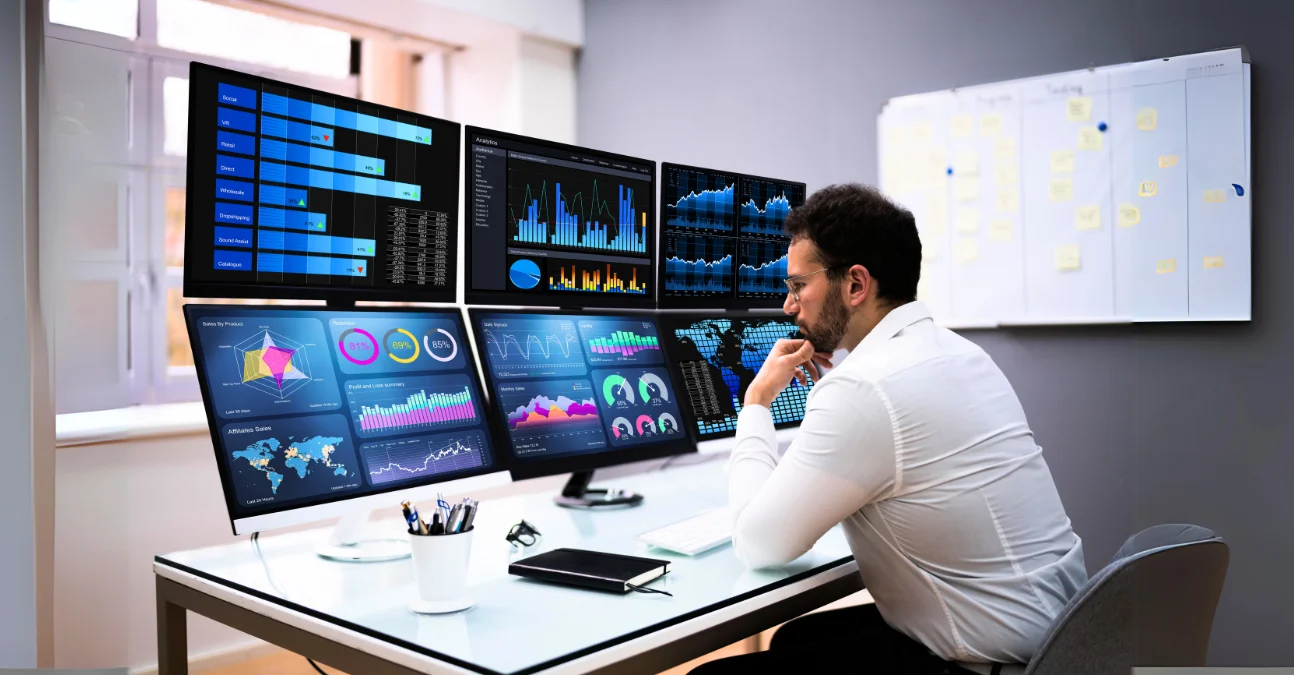
I used to think the S&P 500 was something only finance professionals cared about. You know the type — people with multiple screens, constant market alerts, and an unhealthy relationship with CNBC. For the rest of us, it felt distant. Abstract. A number that went up or down without much meaning attached to our actual lives.
But somewhere along the way, that mindset cracked.
It wasn’t a dramatic moment. No big market crash revelation. Just a slow realization that the S&P 500 was showing up everywhere — in retirement conversations, news headlines, even casual chats with friends who’d never once called themselves investors. And once I started paying attention, I couldn’t unsee how deeply it connects to everyday decisions, moods, and long-term plans.
Honestly, I was surprised by how personal it started to feel.
The S&P 500 Isn’t Just a Chart — It’s a Story in Motion
At its core, the S&P 500 represents 500 of the largest publicly traded companies in the United States. That part is simple enough. But what gets lost is that these companies don’t exist in a vacuum.
They employ millions of people.
They drive innovation.
They react — sometimes dramatically — to global events, political decisions, and consumer behavior.
So when the index moves, it’s not random. It’s reflecting thousands of real-time reactions across industries. Tech optimism. Energy anxiety. Healthcare stability. Consumer confidence rising or falling.
That’s why following broader analysis through resources like fintechzoom.com sp500 can be so useful. Instead of staring at raw numbers, you start seeing the narrative underneath — the why behind the movement, not just the movement itself.
The Emotional Side of the Market (No One Warns You About This)
One thing no one really tells beginners is how emotional the market feels once you start watching it. The S&P 500 might be data-driven, but the reactions around it are anything but robotic.
A strong inflation report comes out — suddenly optimism creeps in.
The Fed hints at higher rates — anxiety spreads fast.
Earnings season disappoints — confidence takes a hit.
You feel it, even if you’re not actively trading.
I’ve seen people swear they’re “long-term investors” panic over a single red week. I’ve also seen calm investors shrug off volatility because they understand the bigger picture. The difference usually isn’t intelligence — it’s context.
That’s another reason platforms discussing the fintechzoom.com sp500 angle resonate with so many readers. They help ground emotional reactions in actual market mechanics, which — let’s be real — is something most of us need from time to time.
Zooming Out Changed Everything for Me
Here’s a quiet truth: watching the S&P 500 daily can mess with your head.
One day it feels like the economy is unstoppable.
The next, it feels like everything’s about to collapse.
But zoom out. Really zoom out — five years, ten years, decades.
Despite recessions, wars, financial crises, political instability, and global pandemics, the long-term trend of the S&P 500 has historically been upward. Not smoothly. Not predictably. But persistently.
That doesn’t mean risk disappears. It means perspective matters.
Once I stopped reacting to short-term noise and started viewing the index as a long-running economic story, my relationship with investing — and even saving — became less stressful. Tracking insights via fintechzoom.com sp500 helped reinforce that long-term lens without drowning me in overly technical language.
How Normal People Actually Use S&P 500 Insights
Most people aren’t trying to beat hedge funds or time the market perfectly. They’re trying to answer simpler, more human questions:
- “Am I on the right track?”
- “Should I be worried right now?”
- “Is this a moment to stay put or reassess?”
The S&P 500 often becomes a reference point rather than a target. A benchmark. A temperature check.
I’ve talked to freelancers using it to decide how aggressively to save. Parents using it to gauge retirement account health. Even small business owners watching it as a proxy for consumer confidence.
When explained clearly — like in many fintechzoom.com sp500 breakdowns — it stops feeling like a Wall Street-only metric and starts functioning as a practical decision-making tool.
The Illusion of Perfect Timing (And Why It’s So Tempting)
Let’s talk about timing — because this is where most people trip up.
There’s a persistent belief that successful investors are just better at knowing when to get in and out. In reality, even professionals miss major moves. What separates outcomes isn’t timing brilliance — it’s consistency and discipline.
Some of the S&P 500’s best days historically happened immediately after its worst days. Miss those rebounds, and long-term returns suffer significantly. That fact alone convinced me that reacting emotionally is often more dangerous than doing nothing.
Following market commentary around the fintechzoom.com sp500 discussions helped reinforce this idea. Not because it offers predictions — but because it consistently frames volatility as part of the process, not a failure of it.
Why the Media Obsessively Tracks the S&P 500
Ever notice how nearly every economic headline mentions the S&P 500?
That’s because it’s widely viewed as the most reliable single snapshot of U.S. market health. When it rises, confidence grows. When it falls sharply, concern spreads — sometimes beyond finance into politics and policy.
It reflects:
- corporate earnings strength,
- investor sentiment,
- interest rate expectations,
- and overall economic momentum.
So even if you never buy a stock directly, the S&P 500 still shapes the environment you’re living in. That’s why analysis hubs like fintechzoom.com sp500 continue to attract attention — they sit at the intersection of markets, media, and everyday relevance.
A Personal Shift I Didn’t Expect
I used to avoid market topics because I thought they weren’t “for me.” Too technical. Too intimidating. Too disconnected from real life.
Turns out, that was a costly assumption.
Once I allowed myself to engage — imperfectly, casually, without pressure — I realized understanding the S&P 500 wasn’t about becoming an expert. It was about becoming informed enough to not feel powerless.
That shift didn’t happen overnight. It happened article by article, explanation by explanation, often through accessible breakdowns like those found in fintechzoom.com sp500 discussions.
Final Thoughts — Not Advice, Just Perspective
Well, if there’s one thing I’ve learned, it’s this: the S&P 500 isn’t something to fear or idolize. It’s something to understand.
It reflects ambition, fear, growth, missteps, and resilience — all at once. In many ways, it mirrors human behavior more than we like to admit.
You don’t need to watch it obsessively. You don’t need to predict its next move. You just need enough clarity to make calm, informed decisions when uncertainty shows up.
And if you ever feel overwhelmed by market noise, step back. Read explanations that sound human. Trust long-term thinking. And remember — behind every index movement is a collective of real people trying to figure things out, just like the rest of us.